

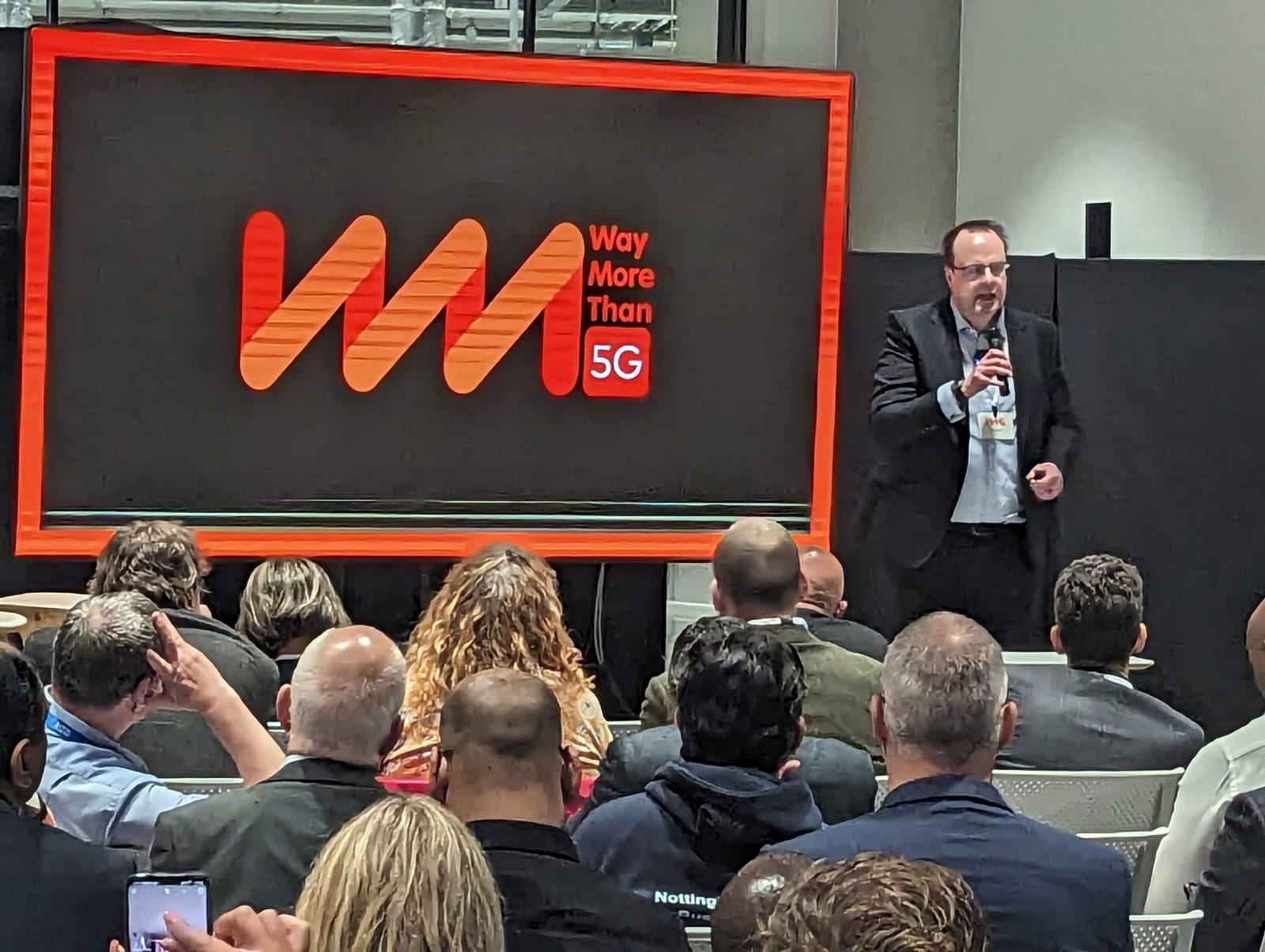
Robert Franks, Managing Director – WM5G

Robert Franks
I was struck by a tension between two excellent conferences that I attended this week. The first was an Economic Growth conference which highlighted the growth challenges facing mature economies with ageing populations, like the UK.
This was followed by disappointing GDP growth figures for the UK economy. Meanwhile the second conference was a Tech Transformation Summit which highlighted to amazing advances in AI, following vast investments. The step-changes in large language models over last year are truly mind-blowing.
As a result I found myself asking why the hundreds of billions invested in AI over the last decade doesn’t yet appear to have translated into economic growth and why aren’t economists and business leaders more optimistic about the potential for AI to fuel growth? Surely AI enables businesses, public services and citizens to do more with less and potentially create major new growth opportunities.
Is it simply a question of time before AI adoption drives economic growth – recognising that technology adoption always takes longer than expected – or are we not seeing economic growth because the spoils from AI adoption are concentrated in the hands of a small number of global tech companies or is there something else going on?

Stepping back, the transformation potential of AI adoption is clear and starting to become real. The company I lead delivers digital transformation programmes working in partnership in the health and care sector in the UK as well as manufacturing and transport.
In healthcare, we’re already using AI with our partners to cut the time to diagnose bowel cancer from around 32 weeks to 2 weeks as part of our colon capsule endoscopy (‘pillcam’) services. We’re also using AI with our partners to help doctors to diagnose and treat hypertension more effectively and to enhance the effectiveness of diabetes medication prescriptions.
And we’re barely scratching the surface. For example, we’ve worked in partnership with the UK Government and three large Local Authorities to roll out Technology-enabled Social Care to over 550 adults in the UK.
The aim is to support people to live longer, happier and healthier lives at home – using a portfolio of over 50 different devices as part of a managed care solution that can be tailored to citizens’ individual needs. As a result of the success of this large-scale pilot we now have a large database which we can use with AI to further improve the quality of care given to citizens and well as the productivity of carers.
Examples like the above are happening at the hard, deep transformation, end of AI adoption. The challenge here isn’t the AI technology – in most instances that seems to work well – it’s the fact that processes, governance and operating models need to be transformed in order for the benefits of AI to be proven and scaled.

A lot of this starts with data normalisation, data governance, baselining and evaluation. On the people side, find out how busy staff integrate AI agents into their day to improve processes and then winning hearts and minds to do it takes time and effort. Nevertheless it’s clear that effort with these projects can lead to massive rewards in terms of efficiency, differentiation (for businesses) as well as customer experience and outcomes improvements.
At the other end of the adoption curve, I’m struck with the ease with which many of us have started using AI assistants – such as ChatGPT, Gemini and Copilot – intensively for a wide range of tasks.
Unlike the above many of us have found ways to self-learn and use these tools to save time and improve results in a whole variety of areas. In my healthcare example above, one example of this kind of fast standalone app-driven adoption of AI is the automatic transcription of notes from conversations that nurses and carers have with citizens in their homes.
In the past nurses and carers would take copious written notes from visits to citizens homes, only to find out that at the end of the long day on the road they have a-day’s worth of written notes to type up. Now they ask citizens’ consent and then use AI apps to record and automatically transcribe the conversations they have with citizens.
This means when they finish their busy days they just need to check the AI transcripts, rather than type them in from scratch, saving hours of work and enabling them to spend more time doing what they want to – helping people.
While this is fast becoming ‘table-stakes’ for many organisations it’s vital to keep up with these opportunities to both avoid the considerable costs of catching up as well as to create the short-term proof points of the benefits of AI adoption to build confidence in deeper AI transformation investments.
However, while the examples above perfectly highlight the two-speed nature of AI adoption, they also assume a degree of insight and know-how that surveys suggest many businesses – especially Small and Medium-size Enterprises don’t have access to, beyond the obvious uses of AI assistants of course.

There’s no doubt that it will take many year to realise the full benefits from AI adoption. If we truly want our economies to reap the transformational benefits of AI to drive inclusive growth it’s vital that we make the breakthrough use cases, business cases, sourcing models and evidence of how specific AI-powered solutions can work in specific sectors to create value more widely available and more easily accessible to businesses and public sector organisations of all kinds.
A decade ago, countries including the US, UK, Germany and South Korea started to address a similar challenge for Industry 4.0 technologies in the manufacturing sector by providing business support programmes to aid adoption – especially for SMEs. We need a similar approach to AI to reap the rewards for our economies – building on the work that our organisation and many others are doing on individual programmes in key sectors like health and care.